There has never been a better time to find teaching resources.
With a quick search, you can find free worksheets, lab activities, and lesson plans from countless websites. You can even ask ChatGPT to generate an entire activity in seconds.
And honestly? There is nothing wrong with using those tools.
But there is a difference between a resource that has been generated and a resource that has been taught, tested, revised, and improved in a real classroom.
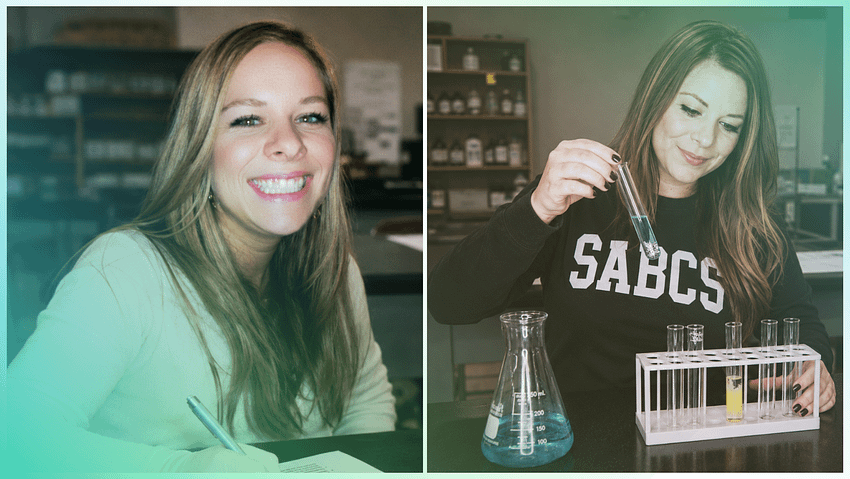
That difference is exactly why I created CHEMcademy.

Every Resource Has Been Classroom-Tested
Sure, you can find free resources from websites or use AI to create a worksheet in minutes.
But my resources have been tested and tweaked by both myself and my very real students.
Think about it this way: would you want to try a lab experiment that has never actually been tested in a lab?
That’s a little like handing students chemicals, crossing your fingers, and hoping the directions make sense.
What could possibly go wrong?
There are countless little details that can go wrong. Procedures can be confusing. Questions may not lead students toward the intended learning outcome. Materials might be harder to obtain than expected. Timing can be completely unrealistic.
Every CHEMcademy resource has gone through the real-world test of being used with actual students. Along the way, I have adjusted directions, clarified questions, improved procedures, and refined activities based on what worked and what didn’t.
The version you receive is not a first draft. It is the result of years of classroom experience.

True Story: Why I Still Test My Labs
One of the biggest lab mistakes I’ve made didn’t happen during my first year of teaching.
In fact, it happened with a lab I had successfully used for years.
I had a decomposition lab that I loved because it was simple, reliable, and consistently produced great results. During the first portion, students heated the solid substance in a test tube and observed the changes as it decomposed. I had probably run this lab dozens of times without a problem.
Then one year I decided to switch things up.
Instead of giving every group the same amount of substance, I thought it would be interesting for each group to use a different mass. One group received 5 grams, another 10 grams, another 15 grams, and another 20 grams.
The problem wasn’t the lab itself, but that I had never actually tested the larger quantities before handing them to students.
For years, I had only used about 5 grams of the solid.
As students began heating their samples, I noticed something strange. The 5-gram samples behaved exactly as expected. The larger samples, however, did not.
Instead of the entire solid gradually melting and decomposing, only the bottom portion in the test tube was being heated enough to decompose. Gas began forming underneath the remaining solid sitting above it … just building up pressure.
And then I heard it.
Pop.
A chunk of solid shot out of a test tube.
Then another.
Pop. Pop.

At that point, it sounded like the chemistry version of extreme pop-rocks.
I immediately knew I had made a mistake.
Fortunately, students were wearing goggles, safety procedures were being followed, and nobody was hurt. But standing there watching my lab turn into an unintended chemistry fireworks show was a humbling experience.
The funny part is that the lab itself wasn’t new.
I wasn’t testing some experimental activity I found online the night before.
This was a lab I knew well.
That experience taught me an important lesson: even small modifications can lead to completely unexpected results.
It’s one of the reasons I spend so much time tweaking, revising, and retesting my resources. Every adjustment, whether it’s changing a procedure, modifying a question, or altering the amount of a substance used, gets evaluated before it finds its way into a student activity.
For Tips on How to Save a Failed Chemistry Experiment read here
Yes, There Is an Answer Key
And yes, I did the math myself.
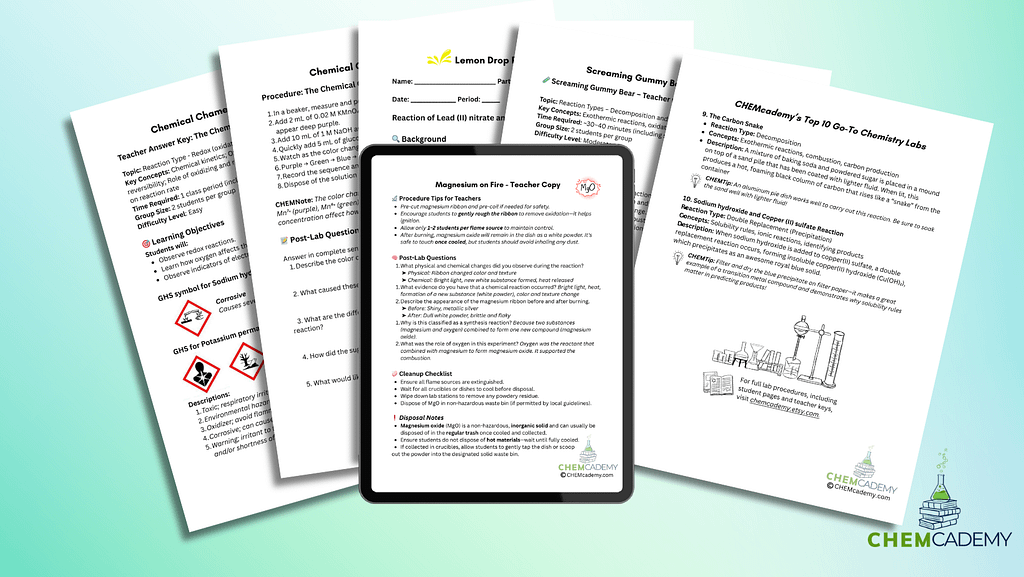
Every worksheet, practice activity, and lab includes a complete answer key.
As teachers, we have enough on our plates already. The last thing we need is to spend our planning period solving every problem before assigning it to students.
When I create a stoichiometry worksheet, I work through every calculation. When I create a lab, I complete the analysis questions. When I create an assessment, I verify the answers.
My goal is to save you time, not create more work.
Students Come First
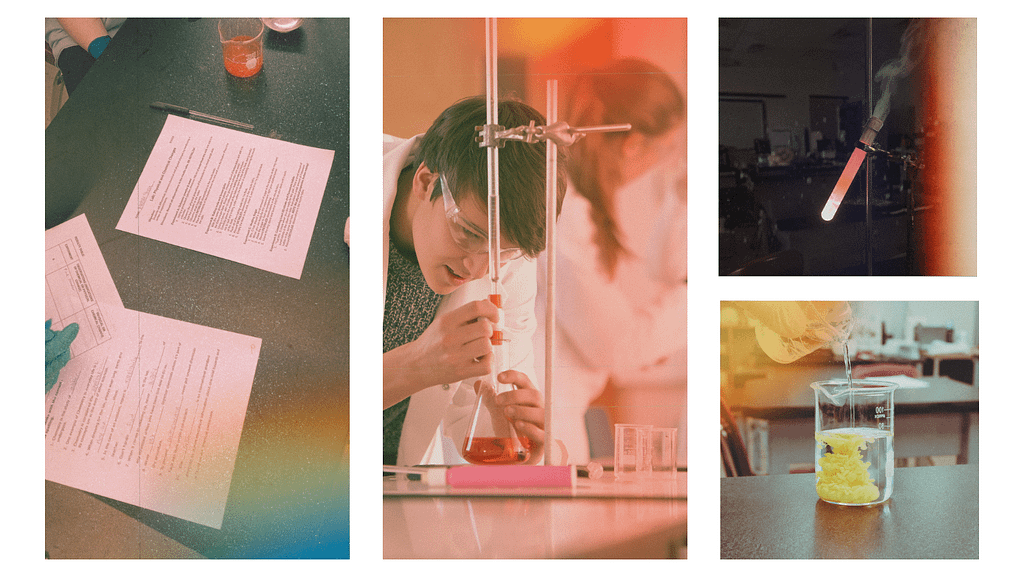
Every resource is created with students in mind.
That means considering:
- Safety
- Learning outcomes
- Critical thinking
- Scientific reasoning
- Hands-on experiences
- Engagement
I want students to do more than simply complete a worksheet or follow a recipe-style lab.
I want them to think.
I want them to ask questions.
I want them to connect concepts.
And most importantly, I want them to safely experience chemistry through real experimentation.
Many of my labs are intentionally designed to be straightforward and accessible. But simple does not mean shallow. These activities are built around important chemistry concepts and opportunities for deeper thinking.
Students leave with both content knowledge and practical laboratory experience.
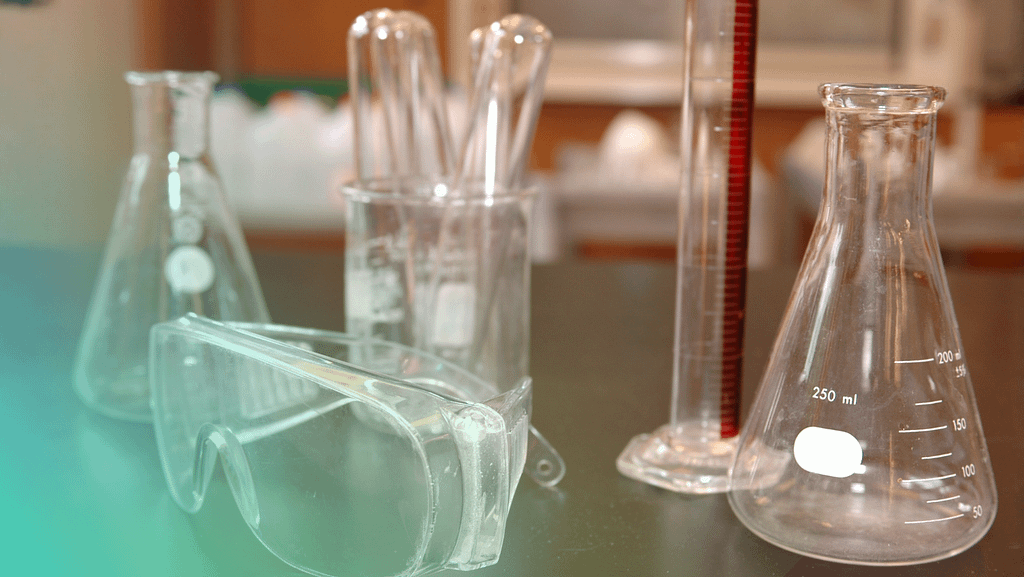
Real Chemistry Doesn’t Have to Break the Budget
If you’ve taught chemistry for any length of time, you’ve probably experienced this moment:
You open a lab manual and immediately think:
“We don’t have any of this. .. Who owns a spectrophotometer for every lab group?”
Or maybe:
“We can’t afford [a], [b], [c].”
Suddenly, a great lab idea feels completely out of reach.
Yes, you can always perform a demo instead. But we all know students don’t learn chemistry the same way by watching as they do by actually doing.
That challenge is one of the biggest reasons CHEMcademy exists.
Over my 10+ years in the classroom, I have created resources because I needed them.
I developed worksheets that pushed students toward deeper thinking when provided resources fell short.
I redesigned labs so they focused on the core chemistry concepts without requiring expensive equipment or large quantities of chemicals.
In some cases, I completely rebuilt activities when I gained access to additional equipment.
Shout out to every parent who donated supplies or took care of my Amazon wishlist!
I even redesigned certain labs so every student could perform the experiment individually instead of simply watching a partner do the work.
Did it take more time?
Absolutely.
Was it worth it?
Without question.
Some of my favorite teaching moments came from watching students who normally sat quietly during labs suddenly take ownership of their experiment. Students who often stayed in the background became confident, engaged, and curious when they had the opportunity to work directly with the materials themselves.
Those moments reminded me why hands-on science matters.
Read here for tips on funding your Chemistry classroom 🙂
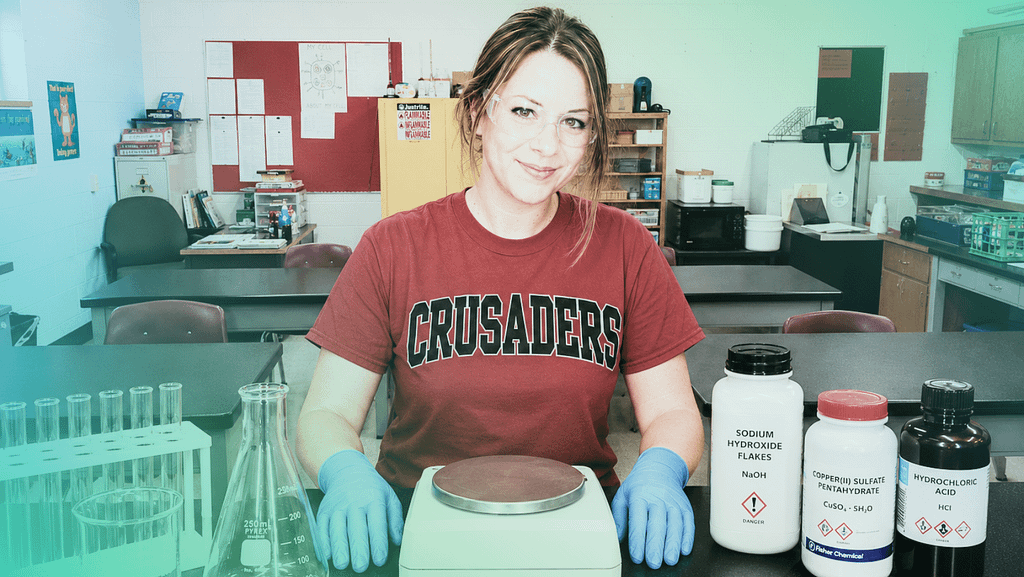
The CHEMcademy Difference
CHEMcademy resources aren’t created to fill space in a lesson plan.
They are created to solve real classroom problems.
Every worksheet, lab, and activity has been shaped by years of teaching chemistry, working within budget constraints, adapting to available equipment, and helping students build genuine understanding.
These resources are classroom-tested, student-centered, budget-conscious, and designed with both teachers and students in mind.
Because chemistry deserves more than a worksheet generated in seconds.
It deserves resources that have survived real classrooms, real students, real mistakes, and real teachers trying to make science meaningful with limited time, limited budgets, and occasionally limited patience.