Picture this: you spend your planning period and possibly time after hours setting up a lab. You have prepared solutions, labeled chemicals, set out glassware, printed lab sheets, etc. all after testing the lab beforehand of course.
Essentially you’ve spent time mentally preparing for controlled chaos—only to hear a student say the day after, “Did we do anything important yesterday?”
Lab absences are inevitable in high school science. Students miss class for sports, appointments, sickness, field trips, testing, and sometimes reasons that remain a complete mystery.
The challenge is figuring out how to help students make up meaningful learning without requiring teachers to completely recreate the lab experience during every planning period.
Because let’s be honest: very few teachers have the time—or desire—to run a one-person chemistry lab at 7:15 in the morning while a student casually asks, “Wait… what are we doing again?”
The good news is that students can still gain valuable scientific understanding even if they missed the original lab day.
Nothing Says “Free Period” Like Resetting a Chemistry Lab
As a rookie teacher, I was once expected to use my “free” time to recreate labs for absent students. In reality, there was nothing free about it. I would stay after school resetting equipment, reorganizing materials, and running an entire experiment again—often for just one student.
I’m not arguing the importance of hands-on lab experiences. It simply wasn’t realistic or sustainable to completely set up and redo every single experiment for every absence. Eventually, I realized the focus needed to shift from recreating the exact lab experience to ensuring students still understood the science behind it.

First: Decide What the Student Actually Missed
Not every lab has the same instructional purpose.
Before assigning a makeup activity, ask:
- Was the goal conceptual understanding?
- Data collection?
- Practicing procedures?
- Collaboration?
- Observation skills?
- Scientific reasoning?
Sometimes students mainly missed the hands-on experience.
Other times they missed critical content understanding.
This distinction matters because not every missed lab requires a full recreation.
For example:
- Missing a density measurement lab may require practice with calculations and data interpretation.
- Missing a flame test lab may require observation analysis more than repeating every procedure.
- Missing a titration lab may require actual procedural practice because technique matters significantly.
Identifying the true learning goal helps determine the best next step.
Avoid the “Just Copy Someone Else’s Data” Trap
It can be tempting to hand absent students a copy of another student’s data sheet and call it complete.
The problem? Students often learn very little this way.
Without context, many students simply plug numbers into formulas, copy conclusions (copying anything is a HUGE pet peeve of mine), and submit work they do not fully understand.
Instead, students need some connection to:
- the observations
- the procedures
- the reasoning behind the experiment
That does not mean every absent student needs an entirely separate lab setup—but they do need meaningful engagement with the science. Fortunately, there are several options for this!

Option 1: Use Photos or Videos from the Original Lab
One of the easiest ways to support absent students is by documenting parts of the experiment during class. I would usually do this anyway for yearbook pics or to add to our Google Classroom.
Quick photos or short video clips can help students observe:
- color changes
- precipitates
- gas formation
- setup procedures
- measurement techniques
- reaction outcomes
This is especially useful in Chemistry where visual observations matter significantly.
For example, students may miss:
- copper changing color
- a dramatic temperature change
- a failed reaction (which can lead to even better understanding)
- indicator color transitions, etc.
Even short clips recorded on a phone can provide valuable context.
CHEMTip: students are often more willing to engage with makeup work when they can actually see what happened instead of reading a paragraph that says “a reaction occurred.”
Option 2: Turn It Into a Data Analysis Activity
Sometimes students do not necessarily need to repeat the physical lab to understand the scientific concepts.
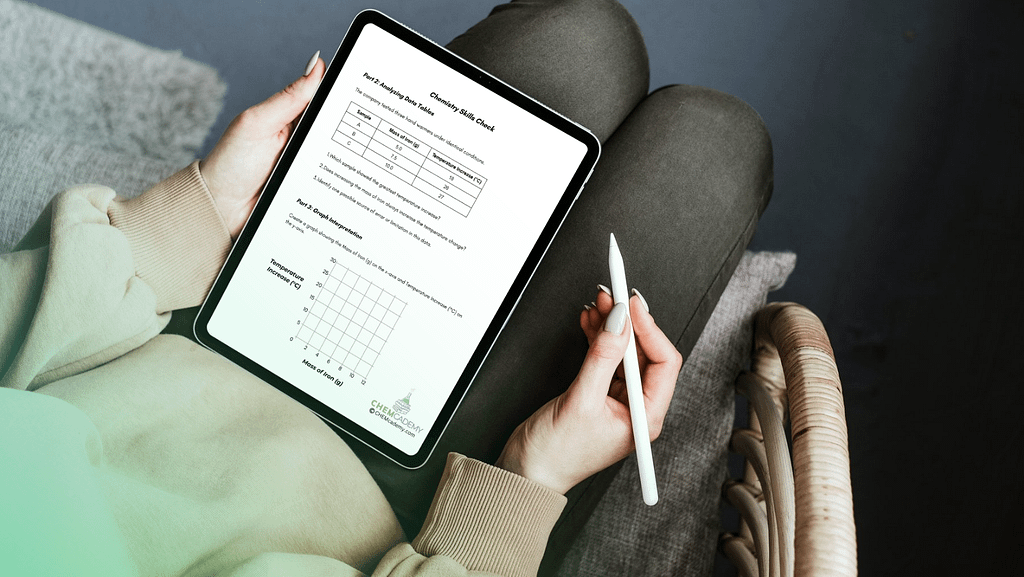
Instead, provide the class data … the sample results, graphs, experimental observations, etc.
Then ask students to:
- analyze trends
- identify sources of error
- calculate results
- interpret findings
- explain conclusions
This approach works especially well for:
- stoichiometry
- density
- percent yield
- motion labs
- graphing activities
- calorimetry
In many cases, students actually spend more time thinking critically about the science through analysis than they would during the original lab itself.

Option 3: Have Students Complete an Error Analysis
Students can learn a tremendous amount from analyzing what went wrong in an experiment.
Provide flawed data, incorrect steps, inaccurate calculations, and even failed setups.
Then ask:
- What caused the problem?
- Which variable affected results?
- How could the procedure improve?
This works particularly well in Chemistry because, realistically, chemistry labs rarely go perfectly every single time.
Sometimes the precipitate refuses to precipitate.
Sometimes the burner refuses to ignite.
Sometimes someone forgets to add the actual reactant.
Science happens.
Option 4: Use a Simulation Instead
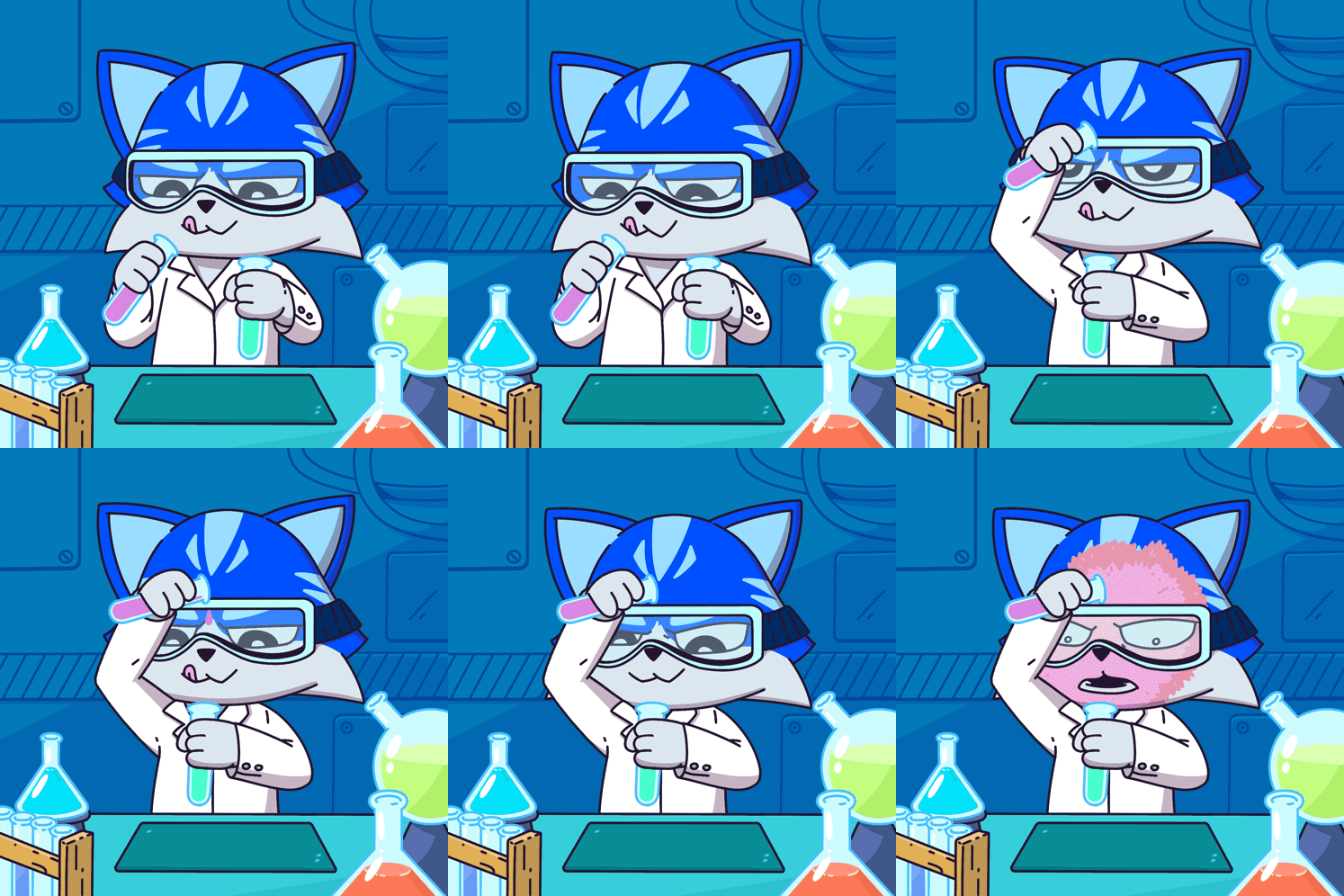
Virtual labs and simulations can be excellent alternatives when:
- materials are unavailable
- safety concerns exist
- time is limited
- the original setup cannot realistically be recreated
Simulations work especially well for:
- atomic structure
- balancing equations
- gas laws
- reaction rates
- molecular polarity
- titrations
While simulations do not fully replace hands-on experiences, they can still reinforce conceptual understanding, scientific reasoning, and observation skills.
And importantly, they allow absent students to actively engage with the content instead of passively copying notes.
Option 5: Make It a CER Activity
CER (Claim-Evidence-Reasoning) activities work extremely well for lab makeups because they focus on scientific thinking rather than simply reproducing procedures.
Students can still review observations, analyze data, construct explanations, and defend conclusions.
For example:
- Did a chemical reaction occur?
- What evidence supports your conclusion?
- Why did the reaction behave this way?
This approach shifts the focus toward reasoning and interpretation—two skills students often need more practice with anyway.
Option 6: Decide When a Makeup Lab Is Actually Necessary
Not every lab needs a full makeup session.
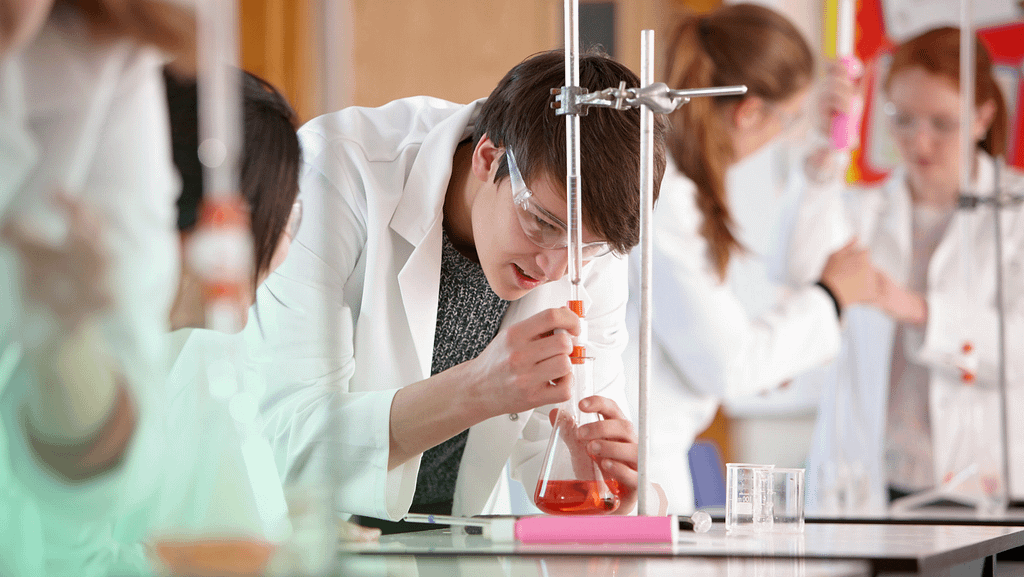
However, some labs truly require hands-on practice, especially when students are learning:
- measurement techniques
- equipment use
- lab safety procedures
- microscopy
- titration skills
- dissection procedures
In these cases, a simplified makeup version may be worthwhile.
The key is keeping it manageable.
Teachers do not need to fully recreate an elaborate multi-day investigation for one absent student during lunch duty.
A shortened version focused on the essential skill is often enough.
Set Clear Makeup Expectations Early
One of the best ways to reduce stress surrounding missed labs is to establish clear procedures from the beginning of the year.
Students should know:
- where makeup assignments are posted
- deadlines for completion (which will also rely on your availability if a lab must be recreated)
- whether labs can be made up in person
- what alternatives are available
- how to access data or materials
This prevents the classic end-of-quarter question:
“Wait… I missed that lab three weeks ago. Can I still make it up?”
Clear systems save everyone time and confusion … and sanity.
Remember: The Goal Is Learning, Not Recreating the Exact Experience
No makeup assignment will perfectly replicate the original classroom lab experience.
And that’s okay.
The goal is not necessarily to reproduce every moment of the lab exactly as it happened. The goal is helping students still engage with:
- the science concepts
- the reasoning
- the analysis
- the problem-solving process
Sometimes that means completing a simulation.
Sometimes it means analyzing data.
Sometimes it means troubleshooting a failed reaction.
Learning can still happen—even without the chemicals, equipment or flames.
Keep Makeup Labs Realistic and Sustainable
As science teachers, we already juggle enough without feeling responsible for recreating every missed lab individually.
The best makeup systems are:
- manageable for teachers
- meaningful for students
- flexible when needed
- focused on core learning goals
Because at the end of the day, students do not always need to repeat every exact step of an experiment to still learn the science behind it.
And if a student misses the one lab where something unexpectedly exploded, made the principal drop by, or set off the smoke detector… Well, sometimes that simply becomes part of the classroom lore they’ll hear about forever.