
The first few weeks of a chemistry course set the tone for everything that follows. Before students ever mix chemicals or light a Bunsen burner, they need a strong foundation in lab safety and proper technique.
Investing time in these skills early doesn’t slow down instruction—it prevents accidents, builds confidence, and creates a classroom where students can focus on learning chemistry instead of worrying about what to do next.
The goal isn’t simply to prepare students for their first lab. It’s to help them develop safe habits they’ll use every time they step into the lab.
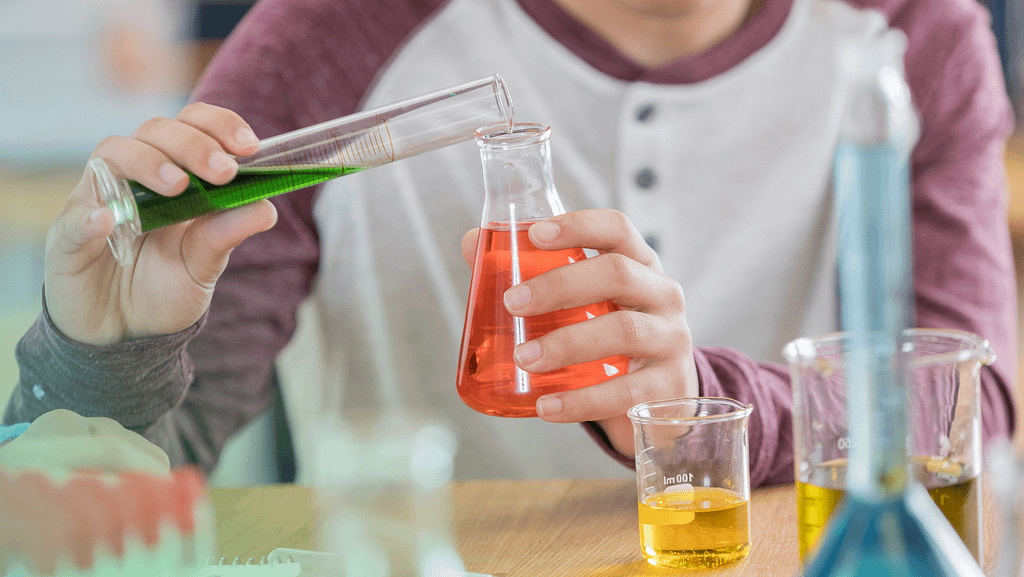
Make Safety a Daily Routine, Not a One-Day Lesson
Lab safety shouldn’t begin and end with a safety contract during the first week of school. The safest chemistry classrooms treat safety as an ongoing routine that’s reinforced throughout the year.
Students should know far more than a list of classroom rules—they should understand why those rules exist and how to respond when something unexpected happens.
That includes knowing what to do if a chemical spills, where emergency equipment like the fire extinguisher, eyewash station, and safety shower are located, and how to respond appropriately to different situations.
Students should also learn how to:
- handle chemicals correctly
- dispose of those chemicals safely
- interpret GHS hazard signs
- Understand (to a certain extent) Safety Data Sheets (SDS)
- recognize common lab hazards
The point is, when safety is woven into everyday instruction—not just lab days—students begin to think like scientists. They learn that safe lab practices are simply part of doing good science.
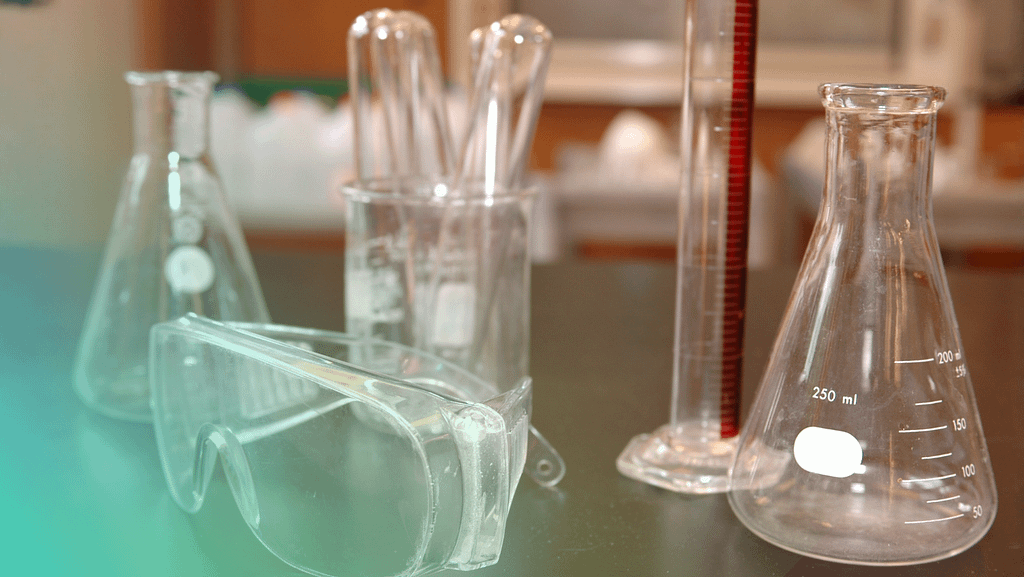
Teach Equipment Before Students Need It
Once students understand lab safety expectations, the next step is helping them become familiar with the lab equipment they’ll use throughout the year.
Many students enter chemistry having never used a graduated cylinder, electronic balance, pipette, or ring stand. Expecting them to learn new equipment while simultaneously performing an experiment can lead to unnecessary frustration and mistakes.
Instead, introduce common lab equipment before students are expected to use it. And—because I believe if students are expected to know something, it should be graded—grade their efforts.
Give them opportunities to identify equipment, understand its purpose, and practice using it correctly. Learning how to read a graduated cylinder at the meniscus, measure mass accurately by taring a gram scale, transfer liquids without contamination, or fix a test tube on a ring stand gives students confidence long before they begin more complex labs.
When students already know how to use the equipment, they can spend their mental energy thinking about the actual chemistry instead of worrying about the tools.

Practice the Skills Before the Science
Like any skill, lab techniques improve through practice. Once students are familiar with the equipment and basic skills, move on to some of the more complex lab skills, and give them time to practice!
Think of how many times you had to practice that titration … students need the same practice and skill development too 🙂
This is why I begin every chemistry course with three foundational labs that focus entirely on building confidence with essential lab techniques before students begin content-heavy experiments.
The lab safety, skills, and technique sequence that I have refined over the years gives students hands-on experience with the skills they’ll use all year, including:
- Reading a meniscus accurately
- Measuring mass with a digital balance
- Pouring and transferring liquids correctly
- Handling chemicals safely
- Filtering mixtures
- Heating substances properly
- Identifying and using common laboratory equipment
- Following laboratory procedures with precision
- Practicing safe cleanup and disposal techniques
By separating skill-building from complex chemistry concepts, students can focus on developing good laboratory habits without feeling overwhelmed.
Once these routines become second nature, future labs run more smoothly, students make fewer procedural mistakes, and everyone feels more confident in the laboratory.
A Ready-to-Use Beginning-of-the-Year Lab Sequence
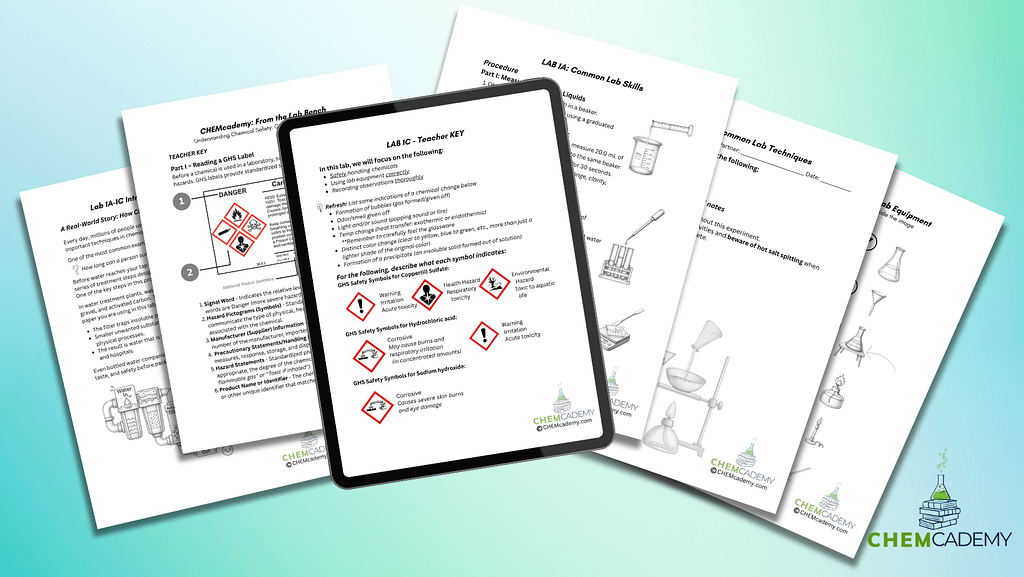
To make those first weeks of chemistry as smooth as possible, I created the CHEMcademy Lab Fundamentals Packet—the exact resource I use to introduce students to lab work each year.
The packet includes more than 50 printable pages designed to build strong laboratory foundations before students begin traditional chemistry experiments.
Inside you’ll find:
- Labs 1A–1C, the three introductory labs I teach first each year
- Complete teacher keys
- A 4-page “Why These Skills Matter” student reading that connects lab techniques to real-world science
- Lab equipment identification sheets
- The Lab Safety Packet I use complete with GHS hazards, how to read an SDS, and handling chemicals safely.
Rather than jumping straight into chemistry content, these activities allow students to develop confidence with the equipment, procedures, and expectations they’ll use for the rest of the year.
Great chemistry labs don’t happen by accident—they’re built on strong foundations. To help students feel confident in the lab (and to keep your sanity throughout the year), safety expectations, equipment skills, and essential techniques should be introduced from the very beginning.
When students understand how to work safely, use equipment properly, and approach experiments with confidence, future labs run more smoothly. Most importantly, students can focus less on the logistics of the lab and more on the chemistry behind each experiment.