
**This post may contain affiliate links. As an Amazon Associate, I earn from qualifying purchases at no extra cost to you, which helps me keep creating free resources for teachers.
If you’re a science teacher, you’ve probably had this experience: it’s lab day, and you’re slicing potatoes at home to demonstrate osmosis, printing lab handouts on your own ink, and silently calculating how many more boxes of gloves you can personally afford before payday.
You’re not alone.

Teachers Shouldn’t Be the Supply Chain
Across the country, teachers are routinely expected to dip into their own wallets to buy classroom supplies. Markers, paper, cleaning products, even basic lab materials — many educators pay out-of-pocket just to keep learning hands-on and engaging.
In fact, a 2023 survey from AdoptAClassroom.org found that teachers spend an average of over $800 a year on classroom materials. For science teachers, especially in chemistry and biology, that number can be even higher due to the need for consumables, safety equipment, and specialty tools.

The Real Cost of a “Hands-On” STEM Education
We hear a lot about the importance of STEM and STEAM education. Districts promote the idea that students should be solving problems, asking questions, and experimenting like real scientists. But those goals require more than just curriculum—they require actual supplies.
Beakers, chemicals, balances, goggles, circuit kits, sensors, models, even vinegar and baking soda — these all cost money. And unlike pencils or paper, many science materials are single-use or consumable. You can’t run an acid-base titration with imaginary phenolphthalein.
If we’re serious about preparing students for careers in science, medicine, and technology, then science classrooms need real funding, not just lofty expectations.
Ways to Fund Your Science Classroom or Lab on a Budget
Thankfully, there are resources out there to help science teachers get the funding they need. Here’s a roundup of reliable options:
1. DonorsChoose
Teachers can post specific projects and get donations from individuals, companies, and foundations. DonorsChoose is particularly effective for classroom sets of materials or basic science kits.
- Best for: Equipment, basic consumables, lab kits
CHEMTip: Treat each request like you would a grant: use clear photos and describe how students will use the items, especially if the items can be used across curricula (ex. Supplies or equipment that will be used by Chemistry classes, Biology classes and maybe even the Physical Science classes).
2. ACS-Hach High School Chemistry Grant
Offered by the American Chemical Society, this grant supports high school chemistry teachers with up to $1,800 for lab equipment and resources.
- Best for: Chemistry-specific needs
CHEMTip: Unfortunately the deadline to receive a grant for the 2025-2026 school year has already passed (June 1, 2025). However, as you move through different Chemistry labs this year, make a list of equipment and supplies that you would like to have or that would make your labs go further. This way, you will be prepared to apply by the end of the year!
3. Local Education Foundations or PTO Funds
Many school districts have education foundations or Parent-Teacher Organizations with mini-grants available for classroom enrichment. Ask your admin or check your district website.
- Best for: Smaller purchases or special projects
CHEMTip: Team up with another teacher for cross-curricular grant ideas (e.g., chemistry + art = tie-dye labs!)
4. State-Level STEM Grants
Check your state’s department of education website or STEM education networks. Some offer competitive grants for lab modernization or STEM initiatives.
- Best for: Larger or tech-based projects (e.g., probeware, 3D printers)
5. National Science Teaching Association (NSTA) Awards
NSTA offers various awards and grants for innovative teaching, including lab-based work. While more competitive, these can bring recognition as well as resources.
The Shell Science Lab Regional Challenge invites K–12 science teachers *in select U.S. communities who create innovative lab experiences with limited resources to apply for up to $330,000 in prizes, including lab makeover packages worth $15,000 (elementary) and $20,000 (middle and high school).
- Best for: Teachers who integrate inquiry-based science
Low-Cost Lab Alternatives That Still Deliver
If you’re on a shoestring budget, these inexpensive (or free) ideas can still give your students powerful hands-on experiences:
Kitchen Chemistry
Use household materials like vinegar, baking soda, red cabbage, cornstarch, salt, and gelatin to simulate real chemistry principles (acids/bases, polymers, diffusion).
Digital Simulations
Tools like PhET simulations (free) and Pivot Interactives (paid but affordable) can replicate some lab experiences when supplies are limited.
Reusable Lab Kits
Invest in durable, reusable items like glass droppers/pipettes, metal chemical spatulas/scoopulas and laminated instruction cards to stretch your budget year over year.
CHEMTip: Reach out to the local colleges, labs, medical facilities, pharmacies etc. for lab supplies and equipment. You’d be surprised how often they will donate disposable gloves, used gram scales, beakers/flasks (even if they’re stained), safety glasses, etc. Also, if you teach any students with parents who work in a science field, reach out to them for similar supplies. Some parents may even ask you to create an Amazon wishlist so they can help take care of those needs throughout the year!
Stretching Your Budget: Affordable Tools to Boost Your Chemistry Lab
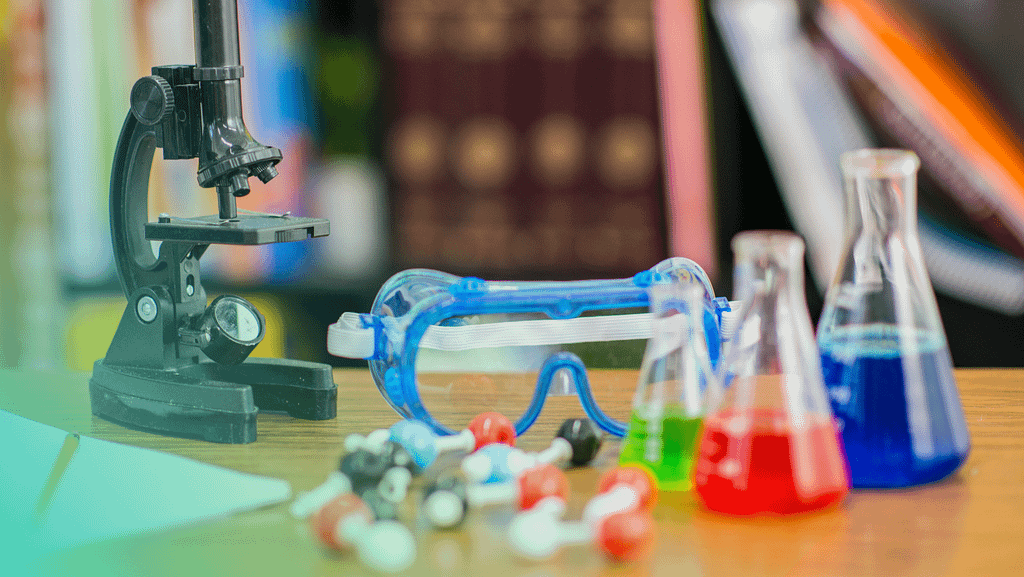
You don’t need a huge budget or a state-of-the-art lab to give your students meaningful science experiences. Some of the most powerful lessons come from simple setups that make chemistry tangible and fun. With creativity and the right tools, even a modest collection of supplies can transform your classroom into a place where students see, touch, and experiment with science.
The key is to focus on versatile, low-cost items that can be used in multiple labs and demonstrations. These budget-friendly tools not only save money but also build flexibility into your teaching—you’ll find yourself reusing them across different units and experiments. Think of them as building blocks: small investments that add up to big opportunities for hands-on learning.
Below are some affordable, high-impact items to consider adding to your chemistry classroom:
- If you need a more complete set of glassware, this set is a great price.
- Lab Glassware Set: includes Graduated Cylinder, Glass Beaker Set, Glass Dropper, Stirring Rod, Measuring Cups for Laboratory Science Chemistry Supplies (20 Pcs)
- For adding to your chemistry lab glassware, this set is a great option (and even has cleaning brushes and droppers)!
- Complete Glassware Set: Includes 3 glass beakers, 3 Erlenmeyer Flasks, 3 graduated measuring cylinders, 5 glass droppers, 2 glass stirring rods, and 2 brushes for all your laboratory needs
- These borosilicate test tubes are the absolute best options for safely heating substances.
- EISCO 24PK Test Tubes, 50ml – Borosilicate 3.3 Glass – 1.2mm Thick Walls, Beaded Rim – Superior Heat & Chemical Durability – 5.9″ Tall, 1″ Diameter
- This cast iron lab stand set adds another layer of safety when heating/filtering substances since the base is practically “fall-proof”.
- Laboratory Grade Cast Iron Base 2.43lbs(8.3″ x 5.5″ ),Rod(24″ L),2 Retort Rings(Dia. 2.4″/3.5″)and one cork lined clamp flask clamp
- Laboratory Grade Cast Iron Base 2.43lbs(8.3″ x 5.5″ ),Rod(24″ L),2 Retort Rings(Dia. 2.4″/3.5″)and one cork lined clamp flask clamp
- If you need safety glasses, this set is great for the price
- 28 Pack Safety Glasses Crystal Clear (Bulk Pack of 24+4) Unisex Anti-Scratch Protective Goggles Impact Resistant Lens Eyewear with ANSI Z87.1 Certified for Construction, Shooting and Laboratory
Even with just a handful of these budget-friendly tools, you can expand your lab activities and give students the hands-on practice they crave—without draining your classroom funds. Remember, creative teaching and strategic spending often matter more than the size of your budget. Pair these affordable additions with grant opportunities, community donations, or challenges like the Shell Science Lab Regional Challenge, and you’ll be well on your way to building a strong, well-equipped chemistry program.
We Need Structural Change, Not Just Creativity
“We expect teachers to reach unattainable goals with inadequate resources. The miracle is this: they often do.” – Haim Ginott
While it’s great that teachers find ways to make science happen despite budget limits, this shouldn’t be the norm. Funding hands-on, inquiry-based science education should be a systemic priority, not a personal sacrifice.
As educators, we can advocate for better funding by:
- Tracking what we spend personally and sharing that with administrators
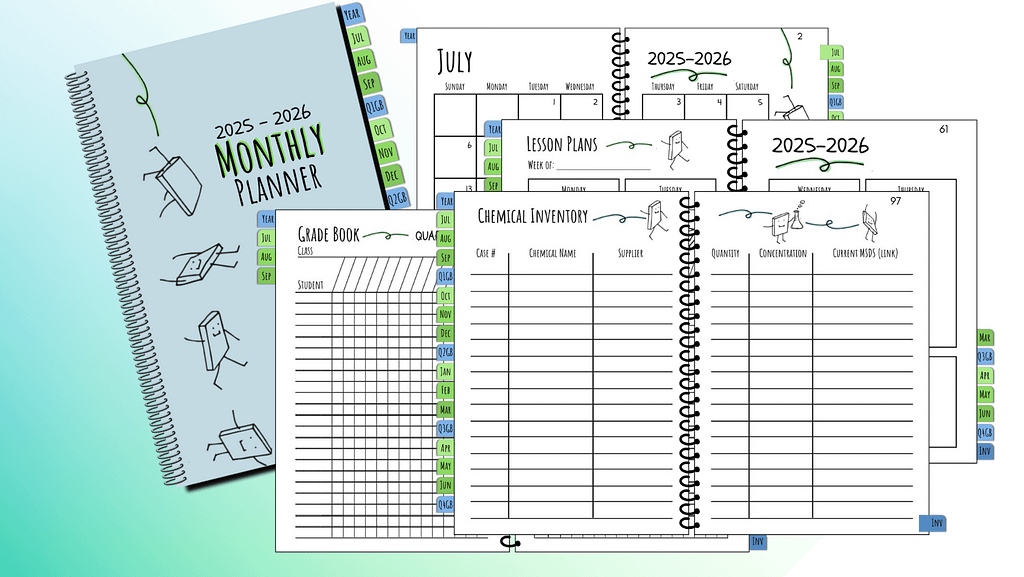
CHEMTip: Keep a spreadsheet of the chemicals, lab equipment, and any supplies you buy and use over the school year. Add the price and purchase location of each. This will allow you to get a quick total of what was spent/used, as well as a log of where each item came from so you can show your admin you are purchasing the best items for the price.
Try this digital planner from CHEMcademy, complete with a chemical inventory section!
- Applying for grants and sharing success stories with colleagues
- Involving families and community members who care about STEM education
At the end of the day, students deserve more than a wish list — they deserve a well-equipped classroom that empowers them to explore, experiment, and engage with science.